
Six Options for Succession and Exit Planning
BY MICHAEL MCLIN
Many business owners know they need to make M formal plans for a successor, but planning can easily take a backseat to the urgency of managing daily operations, people, equipment, credit, cash flow, business development and the next big project. When it comes to the construction industry, where so many businesses are either family-owned or closely held by a small group, planning can be a major challenge.
The idea of “keeping it in the family” is often front and center, and the great unknown of what may happen when the business’ founder is no longer able or willing to be in charge can lead to much concern and uncertainty. Following are the top six options that contractors have for exit planning and succession.
1. Transition to Family
Ifthe exiting owners gift a part or all of the company to members ofthe next generation oftheir family, it typically entails a combination of annual gifts using the IRS exclusion amounts and larger gifts that utilize the owner’s lifetime gift tax exclusion amount. The transfer of control and managementof the company will usually occur overa period of time, often many years. While the family can maintain control and the business stays intact, family members will often receive less cash due to initial sale discounts and incentive plans, as well as because
management lacks capital required to purchase the business.
2. Third-party Management/ Absentee Owner
Construction companies often use management purchases to facilitate ownership changes. The owner group may consist of two to 15 owners at any given time. Owner percentages and specific owners change periodically, and key employees are offered an opportunity to acquire ownership through high performance. Some of thepros of handling the exit planning this way are:
𐤟management may already have experience running the business, which allows for continuity;
𐤟it can be a tool to provide rewards, incentives and retention forkey employees; and
𐤟the business stays intact, so jobs and continuity remain.
On the flip side, some of thecons of this route may be:
𐤟tax inefficiency due to purchasers paying for the business with after-tax earnings;
𐤟deferred taxes of an S corp being passed to the remaining owners; and
𐤟successors could lack readiness and experience with owning and running a business.
3. Employee Stock Ownership Plan (ESOР)
hile an ESOP is tax exempt, this means that more capital may be retained by the company for
growth and operations, and the exiting owner can cash out upon adoption. ESOPs are complex and have more compliance requirements and generally require higher annual administrative costs.
4. Selling to a Third Party
In this instance, the exiting owners search for abuyer that is willing to buy the company outright. For contractors, buyers in the market include:
𐤟large companies looking to roll up smaller companies in an industry segment;
𐤟a competitor that is buying a new market or a larger portion of an existing market;
𐤟a contractor that is looking to expand services or do more selfperformed work; and
𐤟private equity investors expecting a significant ROI.
The owner can certainly leave the company immediately or realize cash more quickly than other options. However, finding an active buyer in today’s market can prove difficult.
5. Selling to Management
This model can fit well into an estate plan with trusts as ownerinvestors and the beneficiaries or trustees serving as board members. The business stays intact, jobs and continuity remain, and the family maintains a legacy. However, the owners retain a highly illiquid asset with no plans for an immediate payout to the exiting owner,
CONSTRUCTION EXECUTIVE | MARCH 2018
so there might not be sufficient resources to maintain their lifestyle during retirement.
This is an interesting option, suitable for when the owner wants to remove himself or herself from day-to-day operations.
6. Asset Sale/Liquidation
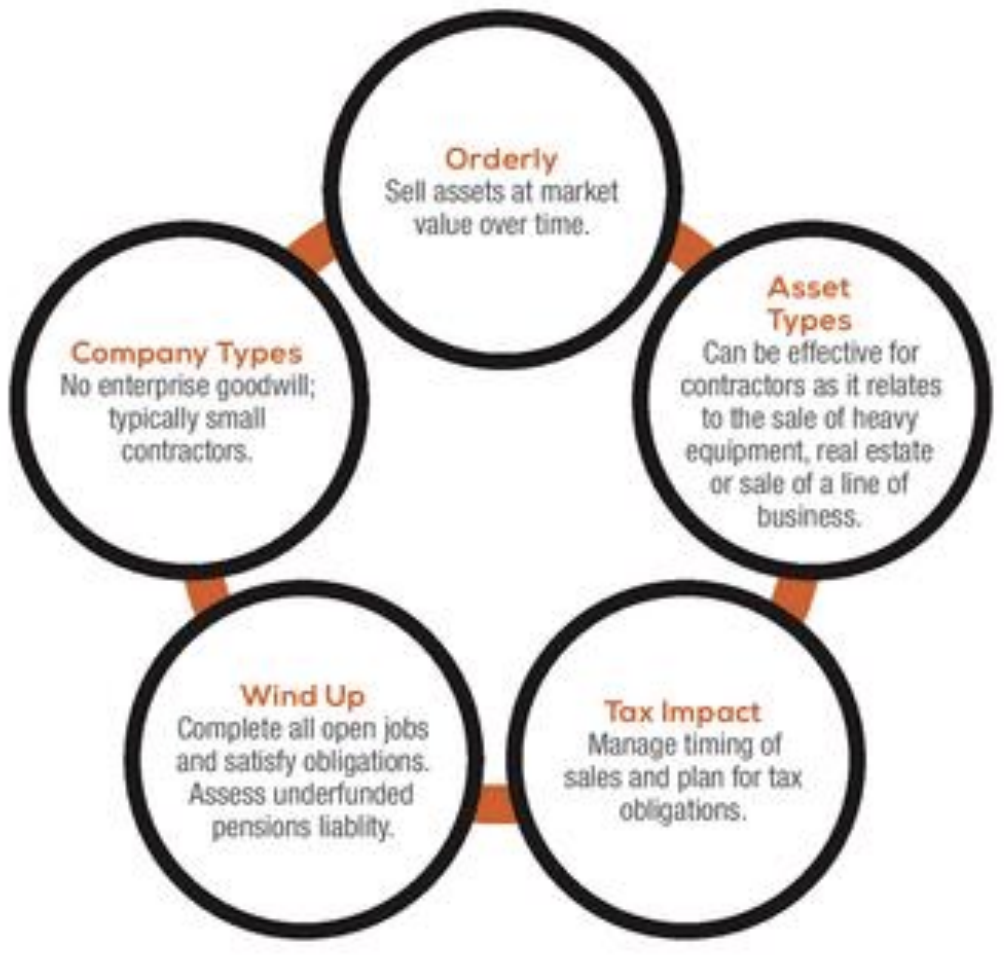
If the exiting owner does not have any capable successors of the business (either family or key employees), or there are no suitable third-party buyers, steps can be taken to wrap up the sale or to
liquidate. Note that this is the most expensive way to wind down a business if contracts still need to be completed; however, the company may be able to control the timing of cash in a favorable time frame. Succession and exit planning are critically important to all organiza tions, especially now that workforce shortages are of utmost concern. Contractors that develop and executea plan are preparing their organization for future leadership transitions and creating a competitive advantage in the marketplace.
Michael Mclin is CEO of Maxim Consulting Group. For more information, email michael.melin@ maximconsulting.com.

CONSTRUCTION EXECUTIVE | MARCH 2018
© 2026 Maxim Consulting Group. All Rights Reserved.
