

Following an acquisition, companies often look for the quickest road to profit acceleration. Unfortunately, a one-size-fits-all path does not exist. Like any other corporate activity, acquisitions are beneficial if they are direct and unequivocal in accelerating the profit of the acquiring company. Acquisitions that solely seek to consolidate shared services and reduce costs are relatively common in the construction industry.
CFMA Building Profits November/December 2021
This idea for growing profit within the target acquisition is considered a narrow view of the potential of an acquisition. The integration of a planned acquisition target might result in different techniques to increase profit.
This final article in the recent mergers and acquisition (M&A) series1 will focus on how successful companies apply structured approaches to smooth the integration of acquisitions to boost profitability. This article will also outline the standard construction-related acquisition strategies that have been devised for management teams.
Take Out a Competitor
When a company wants to enhance its margin and improve its cash flow, it can purchase a target business and then start to make significant changes to its cost structure. By strengthening the target company’s performance, one of the most prominent value-creating acquisition approaches is used. While the acquisition process can also help expedite revenue development, this may not be the case for all acquirers, and cost reduction might be the only path to increased profit. It is much easier to increase a company’s performance if margins are low rather than if they were high. Some people understand that this is evident, but many businesses put their focus on the top line when they seek to purchase a company. To demonstrate how reducing expenditures might increase gross profit margin, consider a subcontractor with a 7% gross profit margin. Cutting expense spending by four percentage points would raise the gross profit margin to 11% and could potentially make the company an outperformer. However, top-line revenue would need to increase by 37.5% to earn the same dollar value in gross profit.
MERGERS & ACQUISITIONS
Integrating Targets to Accelerate Profit
Integration
Keeping existing senior management in their current roles is the best way to maintain consistency. Their in-depth understanding of both the business and employees significantly impacts the establishment of a solid cultural fit. However, it is crucial to remain alert and notice early if the new acquisition is not tracking closely to the integration plan. Three primary areas should be monitored where the company integration falters: financial goal achievement, communication, and exit of key employees.
Financial Goal Achievement
To achieve their financial goals, companies must identify the principal sources of value and critical risks in their acquisitions before setting integration priorities. Many acquirers designate someone to oversee the integration, but they do not begin planning how the new company will be merged until after the acquisition has been completed.
Establishing a clear plan and goals must happen before deal closure. However, management transfer after the integration is complete is often mismanaged or fails to meet established efficiency goals for the new acquisition. And, when integration takes up too much time and effort, managers can become distracted from their essential daily responsibilities. Undisciplined integration efforts interfere with the core business in other cases and lead to conflicting and confusing conversations with customers.
Any of these issues will prevent companies from realizing integration targets.
Communication
Employees may oppose an acquisition integration or leave a company for various reasons, the most common of which is a lack of knowledge about the transition or integration process. Therefore, throughout the integration, it is essential to communicate to the team members about the plan and expectations of employees.
Exit of Key Employees
Skilled and valuable employees often leave because companies take too long to implement new organizational structures and management teams. Company culture directly impacts how employees feel about a new environment, yet these types of issues are often neglected in the integration process and lead to valuable employees seeking opportunities outside the company. The best way to maintain consistency is to retain the present senior management in their current roles, at least in the short term. If leaders are not supportive and fully
engaged, then the rest of the organization may lag and prevent a successful integration. Their in-depth understanding of both the business and employees significantly impacts the efforts toward establishing a solid cultural fit. Also, work on succession planning in the event of a key leader’s unexpected departure or failure.
Often, the CFO or COO leads the transition and is responsible for identifying synergies and then developing and implementing a plan for integrating the new organization. To ensure success, it is essential to get the acquired company’s management involved with teams related to strategic planning, sales, marketing, operations, IT, finance, corporate identity, etc., and have them report directly to the integration leader.
Acquire a Company, Cut Expenses & Improve Profitability
Usually referred to as a “killer acquisition,” this activity is used to eliminate a current competitor or a perceived future competitor. When a company acquires a competitor, it immediately increases top-line revenue, reduces the number of feasible options for customers, and may increase the client base, providing greater pricing leverage. A company can achieve profitability in a short amount of time through such synergies as economies of scale, skilled employees, integrated client lists, contractor relationships, and sales and bid efficiencies.
As is the case with most M&A deals, the majority of the value gained by removing a rival is retained by the seller, not the buyer. However, by reducing the number of competitors in the market, all competitors benefit from a reduced competitive field.
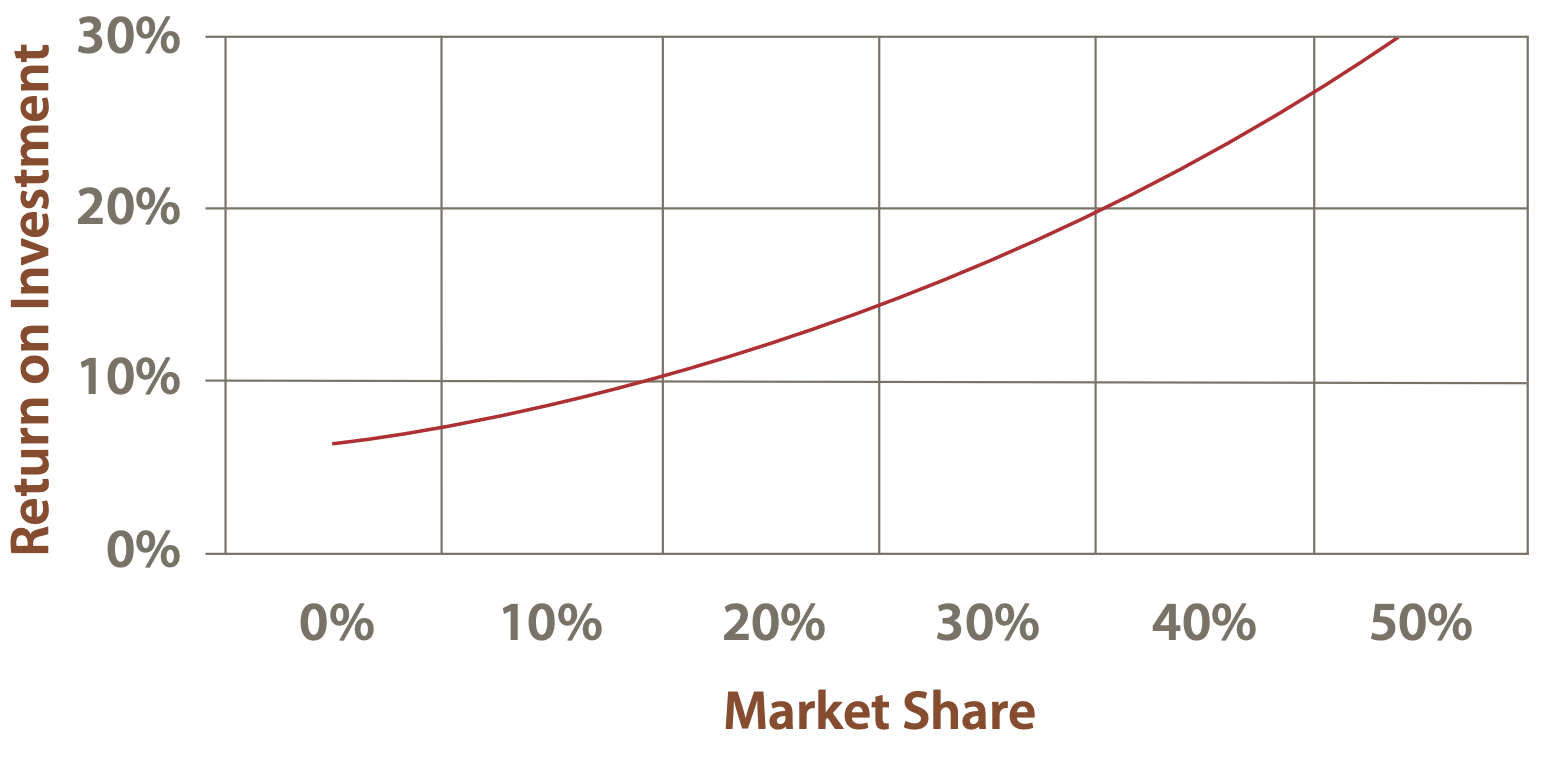
Exhibit 1: Relationship Between ROI/Profit & Market Share
CFMA Building Profits November/December 2021
Integrating Targets to Accelerate Profit
Market Extension Acquisition Integration
Many companies use market extension as a means to grow their businesses. When a company’s growth begins to plateau in a particular market, it can adopt a market extension plan. Market share is now universally accepted as a pivotal contributor to business profitability.
Typically, companies with a larger market share are far more profitable as a percentage than their smaller market share counterparts. As displayed in Exhibit 1, a very high correlation exists between the size of the market and the return on investment (ROI).
There is always an opportunity cost involved in making strategic decisions about how to expand. When considering strategic growth possibilities with limited resources, keep the larger picture in mind. To begin, focus on your value proposition until you can produce more customer and financial value than the competitors. In the end, the company will have the design and plan to use market extension for new markets, customers, and profitability.
Company management and consultants have noted the connection between market share and profitability and use it during acquisition integration.
Take Advantage of Economies of Scale
Economies of scale are realized when cost reductions are achieved after stronger and more sustained service production. A company’s capacity to offer its services at the lowest possible cost is directly related to its size — in particular, the size of its indirectly billable employees, management team, and shared services support staff. With economies of scale, a company’s service offerings may be produced for less if output increases.
When growing profitability through acquisition, economies of scale are key to generating value, occurring more frequently in back-office operations, and potentially converting into substantial acquisition value. However, some large company acquisitions are unwarranted simply due to economies of scale; additional factors are needed to justify the merger because large companies already operate at scale successfully. If two large companies are currently performing at this level, then there is little likelihood that the merger will increase cost savings based on economies of scale.
Economies of scale are crucial sources of value in acquisitions when the unit of incremental capacity is considerable. A
CFMA Building Profits November/December 2021
common tactic of many construction-related companies is to attempt to decrease the number of on-site components used for projects, leading to the creation of prefabrication teams. Prefabrication efforts combined with back-office support consolidation typically accelerate acquisition profitability
The Roll-Up Causal Loop
While numerous construction companies house multiple industry players, only a few large enterprises have significant market dominance. In essence, a roll-up involves numerous purchases, and there are no buyers in a dominant market. Roll-ups that involve families or small groups of owners are best; for the most part, mid-sized players are too expensive to use as a part of a roll-up. When the roll-up grows, it sets a self-reinforcing process in motion in which scale drives outcomes and encourages other vendors to believe they are better off working with them than on their own. However, with a roll-up profitability growth strategy, top-performing companies typically do not integrate these newly acquired organizations. In each given company, there are various unique cultures, personalities, and people who contribute to shaping that company.
This strategy includes the new company’s financials, both consolidated and as a separate line item. If the company can run the newly acquired business similar to how it had been running before the acquisition, then that is what should be done. The efficiency of scale may allow economies of scale to drive system integration with shared services like IT, accounting, payroll, human resources (HR), training, and sales and marketing.
However, many contractors are able to benefit from more consistent and more reliable personnel retention due to their increased independence. This retention keeps their corporate culture intact and produces profitable long-term returns because they are handled as locally owned organizations. There is no synergy with this strategy, except possibly for certain shared services and cross-selling, as all the efforts are purely additive to the parent company. There is typically an increase in after-acquisition owner earnings. The target company must consistently turn a profit with its current operations before the acquisition can logically occur with this strategy.
Bargain Shopping for Acquisition Profitability
Although it is rare to acquire a company for a lower-thanfundamental-value price, it can create value when it happens. Nevertheless, while more prolonged time frames demonstrate
MERGERS & ACQUISITIONS
Integrating Targets to Accelerate Profit
a return to a proper company market value, there might be brief occasions when market values and fundamental values differ. For example, markets can overreact to bad news like a company being sued by employees or a major high-profile project failure in a portfolio of many profitable projects and a substantial backlog. Such occurrences are not extremely common, but having high-level relationships with other companies and placing a call at an opportune moment can lead to an acquisition.
We have not seen many examples of opportunities presented by the market for companies to purchase targets below their fundamental value. Target company owners must be paid a premium over the current market value to acquire the company. When more than one acquirer pursues the same target company, the premium grows considerably, sometimes resulting in buyer’s remorse. If multiple companies discover potential business synergies for a target and all are of the same magnitude, then the company that overstates the benefits for its internal due diligence model most likely will be the one to propose the highest bid. The winner pays too much and takes a loss in the long run.
The bottom line: stay with the fundamentals and know your “bargain price” limit.
Conclusion
Management in companies can increase the likelihood that their purchases will produce value for their shareholders by concentrating on the previously mentioned acquisition techniques that have historically created value for acquirers. When these strategies are designed in advance, acquiring companies can create a clear path and a predictive model to accelerate profit during integration.
Endnote
1. Doyon, Dan & McLin, Michael. “Mergers & Acquisitions: Reasons, Risks & Rewards.” CFMA Building Profits. July/August 2021. www. cfmabponline.net/cfmabp/07082021/MobilePagedArticle.action?article Id=1708728. Doyon, Dan & McLin, Michael. “Mergers & Acquisitions: Identifying Strategic Acquisition Targets.” CFMA Building Profits. September/October 2021. www.cfmabponline.net/cfmabp/09102021/ MobilePagedArticle.action?articleId=1727308.
DAN DOYON is Director at Maxim Consulting Group (www.maximconsulting.com) and is based in Dallas, TX. He works with construction-related companies to solve complex business challenges to increase revenue and profitability. With his guidance, companies have driven over $160 billion in top-line sales growth and hundreds of millions in operational savings through improved processes. Dan specializes in business transformation and turnarounds, published research papers and trade articles, and is an acknowledged industry speaker. Dan received his MBA from Georgetown University. He can be reached at 325-320-9130 and dan.doyon@maxim consulting.com.
MICHAEL McLIN is Managing Director at Maxim Consulting Group (www.maximconsulting.com) in Englewood, CO. Michael is responsible for leading the business and guiding the strategic direction. He works with construction-related firms of all sizes to evaluate business practices and assist with management challenges. Michael is a nationally recognized dynamic public speaker and published author. He can be reached at 303-898- 8440 and michael.mclin@maximconsulting.com.
CFMA Building Profits November/December 2021
© 2026 Maxim Consulting Group. All Rights Reserved.
